
What it feels like to live in Draper
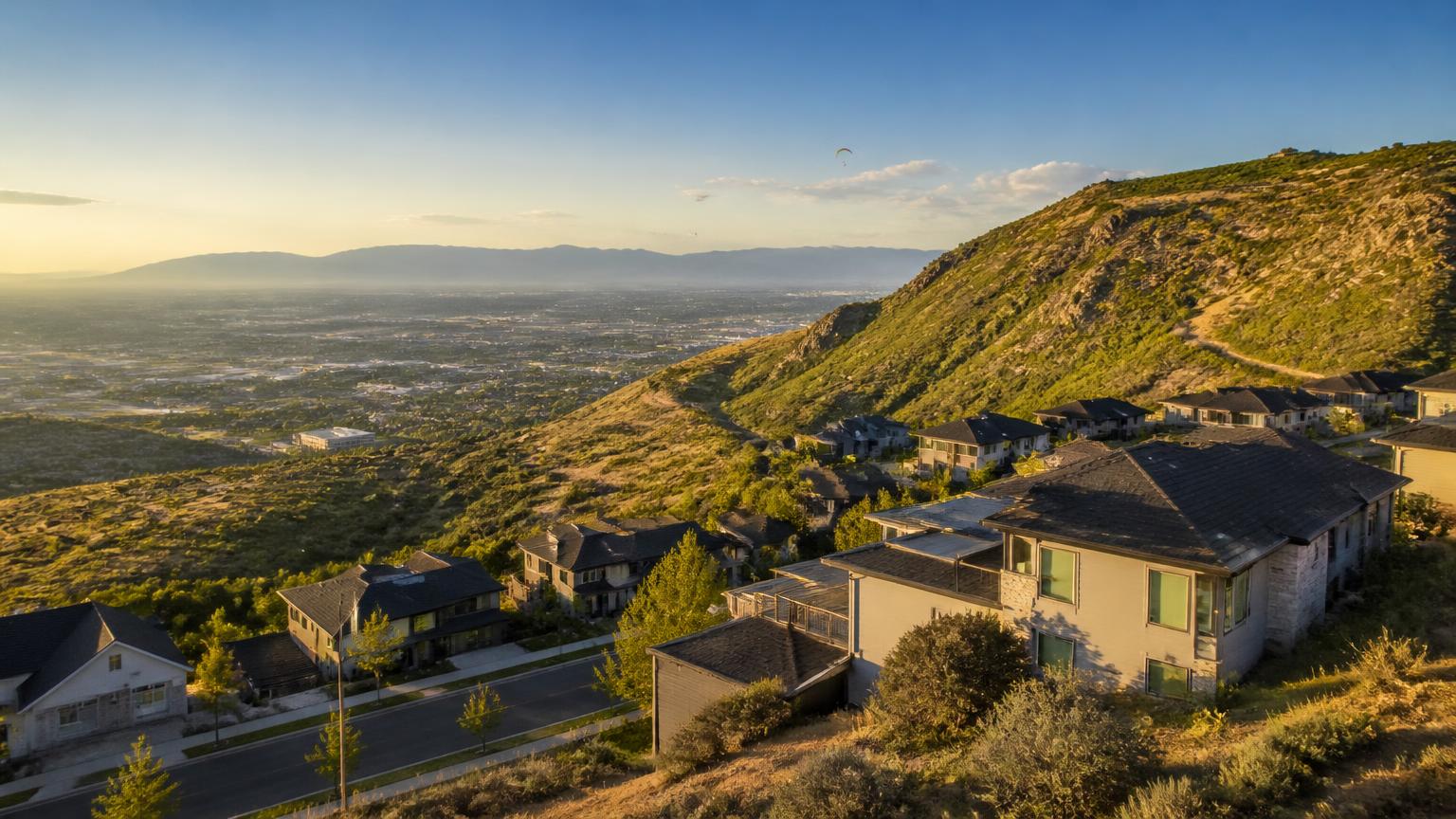
Draper sits at the southern lip of the Salt Lake Valley, where the mountains pinch in at the Point of the Mountain. That geography defines the city: east-side neighborhoods climb the Traverse and Wasatch benches, and almost every one of them opens onto a trailhead.
Corner Canyon Regional Park is the single biggest lifestyle draw — more than 60 miles of maintained trail for hiking, trail running, and some of the best mountain biking in the state, all inside city limits.
The west side along I-15 has become a genuine employment center, with corporate campuses that let a large share of residents commute in under fifteen minutes.
The overall feel is newer and more planned than the older valley cities: wide streets, larger lots on the bench, and subdivisions built mostly from the 1990s forward.
Food & Beverage Scene
Dining clusters along Draper Parkway and the 123rd South corridor, with a strong set of casual independents alongside the expected national anchors.
The Point of the Mountain and Traverse Ridge areas have added upscale casual restaurants aimed at the tech workforce and the trail crowd.
For a serious night out, most residents run 20 minutes north to Sandy's Shops at South Town area or into downtown Salt Lake.
Schools & Education
Canyons School District serves most of Draper, with Corner Canyon High consistently ranked among the strongest comprehensive high schools in Utah.
A portion of the city's southern edge falls into Alpine School District, so boundaries matter more here than in most Utah cities — always verify the address, not the neighborhood name.
Charter and private options, including Juan Diego Catholic High in adjacent Draper, give families additional choices without leaving the area.
Draper Housing Market
Bench neighborhoods like Suncrest and Traverse Ridge carry a meaningful view premium, with custom homes well above the city median.
The valley-floor stock is largely 1990s and 2000s tract product on modest lots, which keeps a reasonable entry point in the market.
Townhome and condo development around the freeway corridor gives buyers a sub-median option that still keeps the trail access.
Pros & Cons
- 60+ miles of Corner Canyon trail inside city limits
- Short commute to Silicon Slopes employment
- Corner Canyon High and strong Canyons District schools
- Newer housing stock with modern floor plans
- Above-median pricing across most of the city
- Split school districts make boundaries confusing
- Point of the Mountain traffic is a daily reality
Frequently Asked Questions
What is the commute like to downtown SLC from Draper?
About 25 minutes on I-15 off-peak and 40–45 during rush hour. TRAX and FrontRunner both serve Draper, with FrontRunner reaching downtown in roughly 30 minutes.
What types of homes are available in Draper?
1990s–2000s tract homes on the valley floor, custom hillside homes in Suncrest and Traverse Ridge with long valley views, and newer townhomes near the freeway corridor.
Is Draper good for mountain biking and hiking?
It is arguably the best in-city trail network in Utah. Corner Canyon has purpose-built flow trails, technical climbs, and quiet hiking routes all accessible from neighborhood trailheads.
Which school district serves Draper?
Most of the city is Canyons School District, but the southern edge falls into Alpine School District. Because the split runs through the middle of some neighborhoods, verify the specific address.
Want a deeper breakdown of Draper real estate or unlisted properties? Connect with Alex Huber.
I'll send current Draper comps, off-market opportunities, and a straight answer on what your timeline realistically buys.